Jewish History Blog

The Path of the Righteous

Rabbi Moshe Chaim Luzzatto’s “Path of the Righteous” became the primer on Jewish ethics.

Rabbi Moshe Chaim Luzzatto’s “Path of the Righteous” became the primer on Jewish ethics.

Rabbi Moshe Chaim Luzzatto was not only a first rate genius, but also a truly holy person. When he was yet a very young man, before his twentieth birthday, he already had a reputation in northern Italy as a great master of Kabbalah. In the early 1700s, he authored one of the premier works in all of rabbinic literature, Mesillas Yesharim (“The Path of the Righteous”). The book is based on a passage of the Talmud attributed to Rabbi Pinchas Ben Yair (Phinehas ben Jair), one of the great holy men of the Talmud. He was such a holy man, the Talmud says, that even his donkey was able to discern whether the hay it was given had been tithed or not.

In the Talmud (Avodah Zarah 20b), Rabbi Pinchas ben Yair is quoted as describing a series of ethical steps by which one can achieve the apex of saintliness: Ruach Hakodesh, “Divine Inspiration.” Rabbi Moshe Chaim Luzzatto’s book, Mesillas Yesharim, is based on that statement. In it, he expounds each of those steps.

Within each step, Rabbi Luzzatto explains the step itself, its elements, how it can be acquired, and what might distract from its acquisition. For example: Watchfulness can be acquired by setting aside time for introspection. Acquiring watchfulness can be impaired by excessive mundane responsibilities, wrong company or a cynical stance in life. The same pattern is used for each of the traits mentioned.

In his introduction, he makes one of the most famous statements in all of rabbinic literature: “I did not write this book to tell you that which you do not know. Rather, I am only putting it down in book form to remind you of that which you already know.” The book is therefore deceptive. At first glance, it looks very simple. But it is bursting with seminal ideas in philosophy and ethics.

The Gaon of Vilna lived a half century later and was a very young man when he read the book. He said that in the first ten chapters he did not find one extra word. In part due to this resounding approbation by the next generation’s undisputed leader, the book became widely popular, and became the primer on Jewish ethics when it was advocated by the Mussar Movement in the mid-1800s. Even today it is studied in most of the yeshivas in the world. A yeshiva student cannot consider his experience complete if he has not studied The Mesillas Yesharim.

Even though it is a very hard book to live up to, nevertheless it sets a code of human behavior and a truly Jewish value system and outlook on life. Jews tend to take on the coloration of the society in which they live, sometimes ingesting and displaying values that are not really Jewish – even though people are convinced that they are Jewish. “The Path of the Righteous” represents authentic Jewish ethics of the highest standard.

Subscribe to our blog via email or RSS to get more posts like this one.

Share/Save
Posted in:
Bible/ Tanach, Ethics
by
Berel Wein
  • Comments Off
  • May 1, 2013

The Chacham Tzvi

At great person risk, Rabbi Tzvi Ashkenazi made it his mission to uproot any vestige of the damaging heresy of Sabbatai Zevi and his beliefs from the national body of Israel.

At great person risk, Rabbi Tzvi Ashkenazi made it his mission to uproot any vestige of the damaging heresy of Sabbatai Zevi and his beliefs from the national body of Israel.

In the decades immediately following the false messiah Sabbatai Zevi there arose a tremendous backlash that unhinged the Jewish world. It is no exaggeration to say that the debacle of Sabbatai Zevi is the turning point of modern Jewish history. It let loose forces that are here today, including the division of the Jewish people into the factions, sects and groups. The fractionalization is a direct result of Sabbatai Zevi and the reaction to him. It pitted Jew against Jew in such a way that the deep scars have still not been erased.

Sabbatai Zevi’s messianism was a distortion of the ideas of the messiah in the Jewish world and the continued belief in him — in any dead person as being the messiah –was a direct threat to Jewish tradition. In the zeal to uproot any vestige of the major, damaging heresy of Sabbatai Zevi and his beliefs from the national body of Israel, many innocent people were punished. In excising the tumor of Sabbatai, healthy tissue was also cut away. Nevertheless, it was a task that needed to be done.

One of the first and greatest Jewish leaders who made it his mission to expose masked Sabbateans was Rabbi Tzvi Ashkenazi (1656-1718).  He was a famous Talmudic scholar as well as a master of Kabbalah. His most well-known book is a collection of responsa called Chacham Tzvi (published in 1712), and he became known as the “Chacham Tzvi.”

Of Eastern European origin, he served as rabbi in many places throughout Europe. Some biographers say that he served as a rabbi in 18 locations. We know of at least a dozen. Eventually, he was appointed chief rabbi of Amsterdam and led a large, powerful and wealthy congregation.

A strong personality, he had within himself the facility of making enemies. He did not bother with diplomatic niceties. He said what he thought and because of his great genius and knowledge he did not suffer fools very well. Not surprisingly, he gained the reputation as a zealot.

Amsterdam was one of the great seats of support for the false messiah Sabbatai Zevi. At great personal risk, Rabbi Ashkenazi became his main opponent and was driven from Amsterdam for his opposition. After the false messiah was exposed, he saw it as his role to uproot any vestiges of Sabbatai Zevi’s movement that still remained in Amsterdam.

He set about on what amounted to a personal crusade. He sought out anyone who promoted the ideas of the Kabbalah upon which the Sabbatai Zevi movement was based. He personally went after all of those rabbis who supported Sabbatai Zevi and made sure that they did not retain any positions of importance in the community.

It was not possible to uproot it all. Even today there are certain customs in the Spanish Portuguese community which date back to the Sabbatai Zevi era. However, in the Ashkenazic community he was successful completely uprooting everything.

Subscribe to our blog via email or RSS to get more posts like this one.

Posted in:
Biographies
by
Berel Wein
  • Comments Off
  • April 28, 2013

False Messianic Fervor and Fever

"Sabbatai Zevi enthroned." Amsterdam, 1666. Messianic beliefs die hard and even survive the death of obviously failed dead messiahs.

“Sabbatai Zevi enthroned.” Amsterdam, 1666. Messianic beliefs die hard and even survive the death of obviously failed dead messiahs.

Messianic beliefs die hard and even survive the death of obviously failed dead messiahs. Such was the case with Sabbatai Zevi, who died in 1676. Although he died as an apostate, he had a considerable Jewish following even at the end. Even after his death, his movement was kept actively alive by his “prophet,” Nathan of Gaza, and a cadre of unstable personalities.

Nathan’s father, Rabbi Elisha Ashkenazi, who was in Morocco in the late 1660s and early 1670s, spawned a new wave of messianic fervor by a Moroccan peasant Jew named Joseph ben Zur, who claimed to be Messiah ben Joseph. In the Talmud we are told that there are two personifications of the Messiah. One is the Messiah ben David, i.e. the Messiah from the House of David. He is the ultimate Messiah who will redeem the Children of Israel, introduce a time of peace and prosperity, build the Temple, etc. However, there is a precursor: the Messiah ben Joseph, stemming from the tribe of Joseph. This Messiah will die or be killed, according to the prophecy in the Book of Zechariah (12:10).

The identity of Messiah ben Joseph troubled all believers of Sabbatei Zevi, because according to tradition he is supposed to come before the Messiah ben David. Where was he?! When was he?! In response to that, Nathan of Gaza gave conflicting answers.

One was that the Messiah ben Joseph had existed in the person of Solomon Molcho. He was a convert to Judaism who died a martyr’s death at the hands of the Inquisition. The idea that Solomon Molcho was the Messiah ben Joseph struck a responsive chord within the Jewish people because he was a folk hero.

A second explanation that Nathan of Gaza offered, at a different time, was that Sabbatai Zevi was of such stature that he obviated the necessity of having a Messiah ben Joseph before him. A third reason he gave was that the collective suffering of the Jewish people constituted the Messiah ben Joseph. Even though this was an enormous problem theologically, it did not bother the masses. Likewise, the fact that all these “answers” conflicted with each other did not bother Nathan. The important thing was that each struck a responsive chord in its own way to different people.

Joseph ben Zur was probably mentally unstable. At the very least, though, he was guilty of a very prevalent habit in the Middle East: smoking hashish. Now, smoking hashish in the 17th century was not seen in the same negative light as the modern world views it. Nevertheless, Joseph ben Zur was both slightly touched and usually high, which together is a lethal combination. He claimed he saw a vision when an angel came to him and said that he was the Messiah ben Joseph and that in order to cement the bond between Messiah ben Joseph and Messiah ben David he should travel to certain place and meet a girl, Sabbatai Zevi’s daughter, and marry her.

Nathan of Gaza’s father encouraged this nonsense. Unfortunately, thousands of Jews in Morocco, Algeria and Tunisia believed in and followed him. When Joseph ben Zur died they were terribly disappointed. The influence of all of these crackpots — Sabbatai Zevi, Nathan, his father, Joseph ben Zur — was especially prevalent among the Marranos.

Therefore, as hard as it is to imagine, Sabbatai Zevi’s movement did not die with his apostasy. It did not even die with his death in 1676 or Nathan’s in 1680. Remarkably, even one hundred years later, well in the 18th century and even at the beginning of the 19th century, there were still vestiges of the movement.

Subscribe to our blog via email or RSS to get more posts like this one.

Posted in:
Biographies, Medieval Jewish History, Sephardic Jewish History
by
Berel Wein
  • Comments Off
  • April 17, 2013

A Portrait of Shtetl Life

roman vishniac book jacket

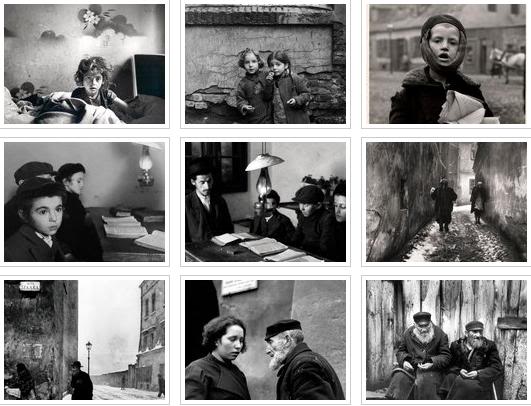
Abraham Joshua Heschel wrote an introduction to Roman Vishiniac’s photographic record of Eastern European Jewry before the Holocaust called Polish Jews. It is a description of Jewish life in the shtetl.

Abraham Joshua Heschel wrote an introduction to Roman Vishiniac’s photographic record of Eastern European Jewry before the Holocaust called Polish Jews. It is a description of Jewish life in the shtetl:

There was scarcely a house in all the kingdom of Poland where its members did not occupy themselves with some study of Torah. Thus, there were many scholars in every community. With the coming of dawn, the members of the chevrah Tehillim, a group devoted to reciting the Book of Psalms, would rise to recite the psalms for about an hour before prayers. Each week they would complete the entire recitation of the Book of Psalms. And far be it that any man should oversleep the time of prayer in the morning, for there was a beadle assigned to the task of knocking on the window shutters of all homes.

Szeroka Street. Vishniac referred to it as the “Broadway” of Jewish Kraków.

Szeroka Street. Vishniac referred to it as the “Broadway” of Jewish Kraków.

One did not miss going to the synagogue except for very unusual circumstances. No disputes among Jews were ever brought before gentile courts or before a nobleman or even before the king. And if a Jew did take his case before a non-Jewish court he would be severely chastised and criticized.

All of the pillars upon which the world rests – Torah, prayer, charity, truth justice and peace — were in existence in the Jewish communities in the kingdom of Poland. To be sure, in the life of Eastern European Jews, there was not only light but also shadow. Though there was learning, there was also a neglect of manners, discourtesy, and provincialism. In the crowded conditions in which they lived, persecuted and tormented by ruthless laws, intimidated by drunken land owners, despised by the newly enriched city dwellers, trampled by the boots of the police, chosen as scapegoats by political demagogues, the rope of self-discipline sometimes snapped.

In addition, Jews lived among naked misery and frightful poverty. And this deafened the demands and admonitions of religious enthusiasm. The regions of piety were at times too lofty for ordinary mortals. Not all Jews could devote themselves exclusively to the Torah and service to God. Not all old men had faces of prophets. There were not holy men and kabbalists, but also yokels, beggars and tramps.

There were many who lived in appalling poverty. Many were pinched by the never-ending worries and there were plenty of taverns available with strong spirits. But drunkards were almost never seen amongst Jews. When night came and a man wanted to while away his time, he did not hurry to the tavern to take a drink. He went rather to his books or joined a group that even with or without a teacher gave itself over to the pure enjoyment of study. Physically worn out by their days of toil, they nevertheless said over open volumes and intoned the austere music of the Talmud.

Poor Jews whose children knew only the taste of potatoes on Sunday, potatoes on Monday, and potatoes on Tuesday, etc. sat like intellectual princes. They possessed whole treasuries of thought, and the knowledge, ideas and sayings of many sages. When a problem came up, there immediately was a crowd of people to offer opinions, proofs, and quotations. One raised a question on a difficult passage in Maimonides’ works and many vied in their attempts to explain it, outdoing one another in the subtlety of dialectic distinction. The stomachs may have been empty, the houses overcrowded and poor, but the minds were rich and replete with the riches of the Torah.

That short description of Eastern European Jewry is certainly accurate as to the Jews who lived in the 1600s in Poland, Lithuania and Russia. It was a time of enormous scholarship. The commentaries to the Shulchan Aruch were all then being written and proposed. It was a time of stability in the Jewish community.

But this was the calm before the storm — and the storm would brew an enormous terrifying hurricane that would engulf the Jewish people.


Subscribe to our blog via email or RSS to get more posts like this one.

Posted in:
Biographies, European Jewish History
by
Berel Wein

Jews and Judaism

Grave of the Rebbe of Kotzk, master of the aphorism. He once said: "I would rather deal with a wicked man who knows that he’s a wicked man, than with a righteous man who knows that he’s a righteous man."

Grave of the Rebbe of Kotzk, master of the aphorism. He once said: “I would rather deal with a wicked man who knows that he’s a wicked man, than with a righteous man who knows that he’s a righteous man.”

I had a rabbi in the yeshiva who taught us very many great things, none of which we appreciated fully at the time. The Talmud tells us that a person doesn’t understand his teacher until 40 years later. Now, some 40 years later, I’m beginning to get the picture a little. One of things that he always used to say was never confuse Jews with Judaism. A Jew’s shortcomings have nothing to do with Judaism. No matter how disappointed you are in Jews, it should in no way diminish the beauty and greatness of Judaism.

Now, in every generation there are righteous people who more than live up to our expectations. However, most of us don’t know people like that and if we do we don’t know that they are righteous that way. One of the hallmarks of the righteous person is that he’s unknown. It’s a catch-22 situation. There is a famous aphorism by the Rabbi of Kotzk: “I would rather deal with a wicked man who knows that he’s a wicked man, than with a righteous man who knows that he’s a righteous man.” Anybody who knows he’s righteous is not righteous. God help us from such people.

The reality of the Jew rarely if ever equals the dream of Judaism. Most of us make compromises. We are able to make allowances for human weaknesses and foibles and understand that many times the reality is not quite the dream. I think that that’s a very important lesson that we have to learn, for instance, how we deal with Israel. We want it to be perfect. However, there is no perfect state in the world. Yet we expect it; the world expects that it should be perfect. We cannot be guilty of any of the sins that all other nations are guilty of. We have to be above everything. It’s very hard, especially since it’s composed of ordinary people who have a daily struggle for existence and survival. It’s hard to live up to a dream.

Subscribe to our blog via email or RSS to get more posts like this one.

Posted in:
Biographies, Jewish Thought
by
Berel Wein
  • Comments Off
  • March 20, 2013

Excommunication

The Church could have ignored Martin Luther’s 95 theses that he posted on the door of the Cathedral at Wittenberg. But once they excommunicated him everyone wanted to know what he said!

The Church could have ignored Martin Luther’s 95 theses that he posted on the door of the Cathedral at Wittenberg. But once they excommunicated him everyone wanted to know what he said!

There has been no more counterproductive weapon in the history of the world than excommunication. By excommunicating somebody you guarantee them an audience. You guarantee them a cause. You make a martyr out of them. Instead of ending the problem, excommunication exacerbates the problem.

That is what happened with Martin Luther and his break with the Catholic Church. The Church could have ignored his 95 theses that he posted up on the wall on the door of the Cathedral at Wittenberg. Or any priest could have just ripped them off! But the mistake the Church made was that they took it very seriously and excommunicated Luther. Once they excommunicated him everyone wanted to know what he said! Where can we get a copy of those 95 things? Before they knew it the Protestant movement spread like wildfire.

That is the problem with excommunication. In the Talmud there are a number of cases of excommunication. But in the Talmud it is always the great men of the Talmud themselves and although the letter of the law was enforced the spirit of the law never was. For instance, the great Rabbi Eliezer ben Hyrcanus was excommunicated because he refused to accept the opinion of the Academy of Hillel over the Academy of Shammai. Yet, Rabbi Akiva and all the other great men of the generation continued to visit Rabbi Eliezer and learn from him! They just did not walk within four feet of him, as the letter of the law required. That is not excommunication as it later was made famous – infamous – by the Church.

A similar story in the Talmud is told about the excommunication of Elisha ben Abuyah, the teacher of the great Rabbi Meir. Rabbi Meir continued to study with him, but also kept the distance. He continued the relationship.

The Chicago Cubs

In 1945, the Chicago Cubs last won the pennant. A yeshiva boy decided to stand in line all night and get World Series tickets…

In 1945, the Chicago Cubs last won the pennant. A yeshiva boy decided to stand in line all night and get World Series tickets…

In 1945, the Chicago Cubs last won the pennant. A yeshiva boy decided to stand in line all night and get World Series tickets — which he promptly turned around and scalped the next day for three or four times the price. However, he didn’t realize that he scalped them to undercover agent for the Chicago police department. They took this 13-year-old yeshiva boy and put him in jail for the night so that he should remember the lesson.

The administration of the yeshiva was in an uproar. A yeshiva boy doing something that!? This was the 1950s. It was unprecedented. The school called a meeting the next morning to discuss if they should allow him back to the yeshiva or expel him.

The dean, Rabbi Greenberg, was a very clever man. One of the teachers came up to him and said, “We have to kick this boy out. It’s in the papers — a yeshiva student in jail, scalping World Series tickets!”

Rabbi Greenburg replied, “I looked through the entire Shulchan Aruch (the corpus of Jewish law) and I cannot find the Chicago Cubs.”

And they did not expel the boy. He graduated and became a leader of the Jewish community in Chicago. Today he lives in Jerusalem, learns Torah every day and has marvelous children and grandchildren. If they would have thrown him out of the yeshiva what would have happened to him?

The lessons of excommunication should not be lost on us today.

Subscribe to our blog via email or RSS to get more posts like this one.

Posted in:
Biographies, Ethics
by
Berel Wein
  • Comments Off
  • March 10, 2013

Jewish Law and the Mercantile System

The 17th century marks the emergence of a new world economy – one which the Jews were extremely influential in bringing about.

The 17th century marks the emergence of a new world economy – one which the Jews were extremely influential in bringing about.

The creation of the mercantile system established a new reality for Jewish businessmen, and at the same time, created a new set of challenges in Jewish law and the rabbis tasked with applying its eternal principles.

In the early 1600s we see in the writings of the rabbis of the time that major changes were taking place. The Maharam of Prague, for instance, writes about an agreement known in Jewish law as hasugas gevul, i.e. a non-compete agreement. As a result of the explosion of opportunity created by the mercantile system it became difficult to have business territories. A virtual global economy had come into existence.

When a Jew took another Jew to a rabbinical court saying that he was infringing on his territory the case came to the Maharam of Prague. He answered that in reality the laws of hasugas gevul should be enforced, but that the present system of economics did not allow it to be enforced. He proposed that the parties agree in advance that there would be no such thing anymore as protected territories or areas. It would now be open for everyone.

That ruling reflected and recognized the fundamental change that was taking place in those times.

Similarly, at the end of the 1500s, there entered into the lexicon of Jewish law the principle of the heter iskah, which means “permission to do business.”

There is a biblical prohibition that prevents one Jew from taking interest on a loan from another Jew. According to the Talmud, this biblical injunction is limited. If someone wants to lend his friend $1,000 he is forbidden to give it on the condition that his friend pays him back $1,100. As long as there was no strong mercantile system — as long as money had an intrinsic value and was not symbolic, as it is in our times — Jews were able to live within its confines, as cumbersome as it may have been. But when the mercantile system exploded into existence in the 17th century and Jews were dealing with extremely large sums of money, a legal device was sought to allow them to operate within this new economic reality.

Basically, it is a great oversimplification, but the idea is to take a loan and convert it into an investment. One does not loan $1,000 and tell the borrower to pay him back $1,100. Rather, one invests $1,000 dollars with the borrower who is going to use it for business and the lender will have the opportunity to make a profit on that investment. Let’s say the lender is entitled to 15% of the profits. However, he does not want to sit down and have his accountant figure out 15% of the profits, so both sides agree that in lieu of the 15% of the profits, the borrower will give the lender a return on the investment of $100. That is basically the heter iskah.

This device of the heter iskah is in use today in many instances and it has become the accepted way of doing business. It has been refined to deal with such innovations as the idea of corporations etc., but the basic idea enabled Jews to become very active in the commercial and mercantile field at the inception of the mercantile system. As such, it serves as an example of how Jewish law is able to deal with new situations in life.

Subscribe to our blog via email or RSS to get more posts like this one.

Posted in:
European Jewish History, History of Finance
by
Berel Wein
  • Comments Off
  • February 26, 2013

A Jewish King in Poland

Saul Wahl, the Jewish King. A card from a Polish historical deck of cards.

Saul Wahl, the Jewish King. A card from a Polish historical deck of cards.

In Padua, Italy, there lived a great rabbi, Meir Katzenellenbogen. His reputation and connections spread far and wide, and he maintained very warm relations with the rabbis in Poland. He even sent his grandson to be educated there. This grandson, Rabbi Shaul Wahl (c. 1542-1622), became famous in his own right and the source of a remarkable legend.

There is no question that he lived and was very wealthy. We have documents where he reported an income of 800,000 rubles per year. This represented enormous wealth. The average laborer made less than 200 rubles per year.

Even though he was very wealthy and blessed with great talent, he had perhaps an even more remarkable quality: he was respected by the non-Jews to the point that he was an advisor to the King of Poland as well as many Polish noblemen. Despite all the intrigues and politics of the court this Jew was not only able to survive but thrive.

The legend is that after the king died, there were three contenders to the throne. The reigning council could not decide on one. Therefore, until they agreed on a successor, they decided to temporarily appoint Rabbi Shaul Wahl to be the King of Poland. The reason they chose him was that if they chose anyone else he might not give up the throne. They only trusted this Jew, who had no pretensions to the throne and who readily give it up, to step into the breach temporarily.

Whether or not there really was a Jewish King of Poland for a day is secondary. At the least it dispels the common misconception that Polish Jewry was always impoverished and lived in misery. While that may have been true for Jewish life in the 1800s, Jews in 16th century Poland flourished. They built great communities with renowned Torah academies. It was a golden age for Polish Jewry.

Was there Jew who was king for a day in Poland? No one can say for sure. But the fact that the legend exists tells us that the Jews in the golden age of Poland lived very differently that the latter day stereotypical image of the Polish Jew.

Subscribe to our blog via email or RSS to get more posts like this one.

Posted in:
Biographies, European Jewish History
by
Berel Wein
  • Comments Off
  • February 17, 2013

Pilot Project For The Entire Human Race

Many non-Jews such as Mark Twain and Leo Tolstoy have penned keen insights into the Jewish people. Paul Johnson in his “A History of the Jews” is another.

Many non-Jews have penned keen insights into the Jewish people. Mark Twain’s famous essay (“Concerning The Jews”) about Jewish achievement being out of proportion to their numbers is perhaps the first one that comes to mind. Leo Tolstoy wrote, “The Jew – is the symbol of eternity…. He is the one who for so long had guarded the prophetic message and transmitted it to all mankind…. The Jew is eternal. He is the embodiment of eternity.”

I would like to add to the list the writings of Paul Johnson. Here is an excerpt of what he said in his A History of the Jews:

What are we on earth for? Is history merely a series of events whose sum is zero? Is there no fundamental moral difference between the history of the human race and the history of ants? Or is there a providential plan of which we are however humbly somehow agents?

No people have ever insisted more firmly than the Jews that history has a purpose and that humanity has a destiny. At a very early stage in their collective existence they believe they detected a divine scheme for the human race of which their own society was the pilot.… Judaism is not a product, but a program, and the Jews are instruments of its fulfillment.

Jewish history is a record not only of physical facts but of metaphysical notions. The Jews believe themselves created and commanded to be a light unto the nations of the world. And they have attempted to obey, to the best of their considerable powers, that commandment.

The results, whether considered in religious or secular terms, have been remarkable. The Jews have given the world ethical monotheism, which might be described as the application of reason to divinity…. The light they shed and distributed has illuminated us well, for it revealed to us painful truths about the human spirit, as well as the means to uplift it.

The Jews have been great truth-tellers. And that is why they have been so hated. A prophet will be feared and sometimes honored, but he will never be loved. A prophet must prophesy. And the Jews, therefore, will persist in pursuing truth as they see it wherever it leads.

Jewish history teaches, if anything can, that there is indeed a purpose to human existence, and we are not just born to live and die like beasts of the field….

If the earlier Jews were able to survey with us the history of their descendants they would find nothing surprising in it. They always knew that Jewish society was appointed to be the pilot project for the entire human race; that Jewish dilemmas, dramas and catastrophes would be exemplary, larger than life, that Jews throughout the millennia should attract such unparalleled, indeed inexplicable hatred. Well, that’s regrettable. But it’s only to be expected. Above all, that the Jews should still survive, when all those other ancient people were transmuted or vanished in history, is wholly predictable. How could it be otherwise? Providence has decreed it and the Jews have obeyed. 

Subscribe to our blog via email or RSS to get more posts like this one.

A Mystical View of Exile

Jews were in exile to extract the “sparks of holiness” scattered throughout the earth….

After the calamities of the Middle Ages, particularly the expulsion of the Jews from Spain, Jewish scholars began to re-examine the meaning of exile. The very concept underwent an evolution. Originally, exile was seen starkly as a punishment for sins. The Books of the Prophets, at least superficially as the masses understood it, explain it that way – it is like a prison sentence. The guilty person serves his time, and when it’s over he goes home.

That argument is easy to maintain for a short exile, like the first Babylonian exile, which lasted 70 years. But in the Middle Ages, that explanation was more difficult. What sin of the Jewish people was so great that it required such a long, bloody and painful exile – with seemingly no end? The Jews may have sinned, but if we compare the Jews’ behavior to many other nations and religious groups in history, it is difficult to place them at the bottom of the ladder. We are not found to be that wanting morally or spiritually. The punishment seems disproportionate to the sin.

This sums up the core problem of Jewish history. Why are we so persecuted? What spiritual purpose does it serve? What purpose does this exile accomplish? If the exile lasts another hundred years, will we become better?

This was an issue that has gnawed at Jewish thought for the last 500 years. It’s not such a problem to us since we live in relative comfort and serenity, even if it’s false serenity. The experience of the exile, certainly inAmerica, is pleasant. But to Jews who had experienced the Spanish Inquisition and Expulsion, to Jews who had experienced the pogroms or the Black Death, to Jews who had been driven from their ancestral homes in Bohemia and Switzerland by the 30 Years War, etc. it was a very real problem.

At least part of the popularity of Kabbalah lay in the fact that it gave answers to these problems, albeit of a supernatural nature. The exile was transformed from being viewed as a punishment for the sins of the Jewish people into a vehicle for redemption (personal, national and global); only through darkness could light shine.

Jews were in exile to extract the “sparks of holiness” scattered throughout the earth, to extract sparks of goodness that lay with the souls of the people of the non-Jewish nations; to gather them together, build them into holiness and transport it all back to the corporate body of Israel, the Jewish people. We were in exile to achieve self-perfection; exile was part of a positive, creative and ultimately redemptive process.

This understanding breathed new purpose into the experience of exile. The Messiah was on his way; at any moment he could burst through. A Jew, even suffering in exile, thus inspired felt that he was engaged in a holy endeavor. As with all holy endeavors it could be costly and painful, but it would lead somewhere better and even utopian. There was no questioning the length of it, because it would take as long as needed to complete the process.

Subscribe to our blog via email or RSS to get more posts like this one.

Posted in:
Spirituality
by
Berel Wein
  • Comments Off
  • January 31, 2013